Booyzen
Farmers on the dry Karoo plains, a name with a puzzle in it that took two hundred years to spot, and a gravestone that told the truth after ninety.
Booyzen looks like Booysen with the s swapped for a z, and the family has always said one of the men changed it on purpose during a war. That story has just been tested — and it did not hold.
From you, all the way back
Start at the bottom. Every step up is one more generation into the past — a real person, in a real place, written down in a real book.
What do the numbers mean? “2× great-grandpa” is just a short way of writing great-great-grandpa. Once you get past three or four greats it is quicker to count them than to say them. So your grandpa’s grandpa is your 2× great-grandpa, and his grandpa is your 4× great-grandpa, and his grandpa is your 6× great-grandpa.
Look at them
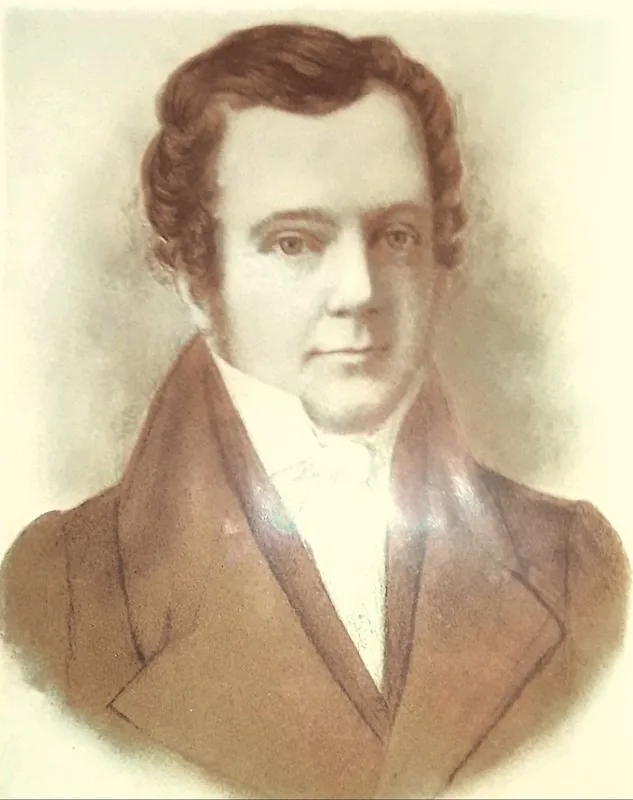
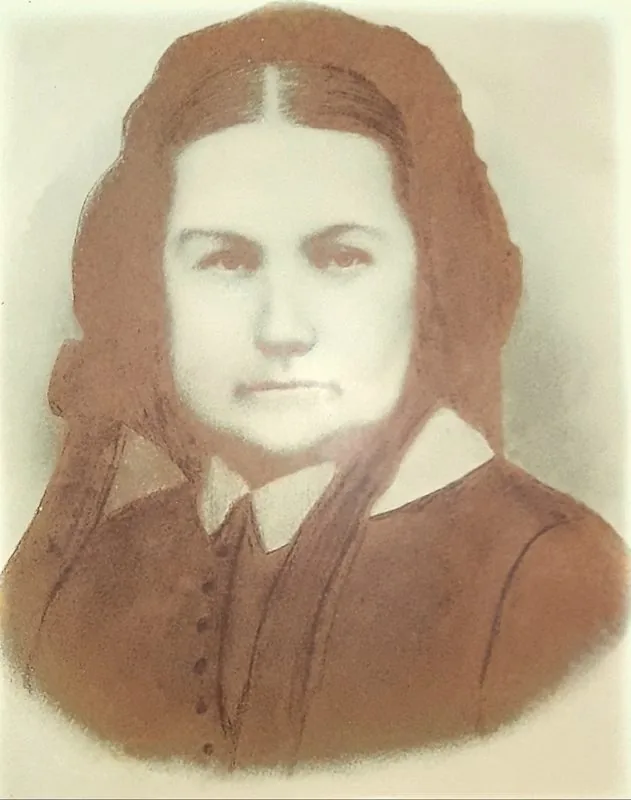
Real photographs of real people you are related to. Some are more than a hundred years old.
Things they actually did
Only 646 people on Earth spell it Booyzen.
There are 53,764 Booysens — with an s. Our spelling is 83 times rarer, and unlike its parent name it clusters in Gauteng rather than the Cape. Something separated this small group off. What is no longer certain is that anybody did it deliberately.
The z was already there in 1851.
Somebody found a much better photograph of a church book from 1851, and the father’s name in it is BOOYZEN, plainly, with a z — long before the war the story blames. And three lines below, the very same clerk, in the very same ink, writes a completely different family’s name twice as PIETERZEN. The Pietersens never changed anything. In Dutch, -zen is simply one of the ordinary ways to end a name like that.
So this website was wrong, and here is the correction.
This page used to say the family invented the z. It cannot have. That is how research is supposed to work: you find a clearer photograph than the one you had, and it makes you take something back. What still stands is a form from 1905 where the clerk wrote BOOYSEN and the son signed BOOYZEN four lines below — two spellings of one name on one page — and the fact that today there are only 646 Booyzens on Earth and 53,764 Booysens.
He sailed on a ship called the Nautilus.
George Augustus Kolbe left Gravesend in England on 3 December 1819 and landed in Africa on 14 April 1820. He was seventeen. He named his farm in the dry Karoo “Wurtemburg,” after the part of Germany his own dad had come from.
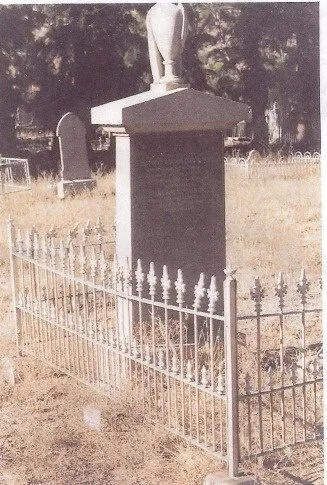
His gravestone is still standing — and it was telling the truth all along.
The stone at Burgersdorp says he was born in London on 7 December 1802. Two hundred years later we found the church book in Soho, London. It says: 7 December 1802. The very same day. A stone in Africa and a book in England, agreeing perfectly.
His dad was a tailor with a shop near Bond Street.
John Gottlob Kolbe made clothes in London and left a real business behind him — with a partner, and instructions in his will for the shop to keep going for fourteen more years.
Forty-four years and nineteen days.
When Johanna Catharina died in 1863 the form asked how old she was. It only wanted a number of years. Whoever was filling it in wrote “44 years & 19 days” — so we can count backwards and land exactly on her birthday, 30 April 1819, at Graaff-Reinet. Somebody in that room knew her that well.
One family forgot its own grandparents in seventy years.
In 1915 a man had to write down his mother’s parents’ names. He wrote: “Father: Kolbe, thinks James was christian name. Mother: Unknown.” Their names were George and Margaret, and their gravestone was standing forty miles away the whole time.
🔎 The bit we still can't solve
Gerthardus Lodewikus is the most frustrating person in all ten families. We have his name and nothing else — no birthday, no parents, not one record. He is a locked door.