Hedviga
Hedviga “Seka” Blažević was born in a dying port on the Adriatic and died seventy-five years later on the Highveld, having crossed a world war, a country that stopped existing, and two continents.
She is the reason this archive exists, and she is also its best-documented person: a birth at Senj on 3 August 1926, a marriage into the Defranceski family, three children, an immigration from Zimbabwe in April 1975, a second marriage to a Sephardic Jew from Rhodes, and a death at Johannesburg on 30 October 2001 with the cause written down plainly.
What the record gives
| Born | 3 August 1926, Senj |
|---|---|
| Father | Ljubomir “Ljubo” Blažević (1892–1966), mornar — sailor |
| Mother | Milka Lucia Papić (1886–1971) — tobacco-factory worker at twenty-one, widow at twenty-eight, supervisor by the end |
| Siblings | Leo (1920–2008), Karmela “Carmen” (1922–1987), Oto (1923–1945), Ljubomir (1929–2007), Mario (1933–1984), Anton |
| Half-siblings | By her mother's first marriage: Miroslava “Mica” Vukelić (1907–1993) and Josip Vukelić (1913–2004). Milka's two marriages → |
| Married | Ivan Anton Defranceski (1925–1995) — who spent part of the war as a sixteen-year-old labourer in a German power works. The Arolsen cards → |
| Children | Ladislava “Ada” (b. 1948, Crikvenica), Ivan Anton (b. 1951, Senj), Robert “Robbie” (b. 1953, Senj) |
| Emigrated | April 1975, to South Africa from Zimbabwe |
| Later married | Santou (Shemtov) Isaac Codron (1913–1997), born on Rhodes — c. 1973, South Africa |
| Died | 30 October 2001, Johannesburg, aged 75 |
| Cause | Cancer of the rectum, spread to the liver |
The shape of the life
She was born into a household of seven children in a town whose economy had already collapsed — the railway had bypassed Senj half a century before she was born. Her mother supervised women rolling cigarettes; her father went to sea.
She was fifteen when the Independent State of Croatia was declared and the war reached the coast, and nineteen when it ended and her brother Oto did not come home. Her first two children were born in Yugoslavia, at Crikvenica and Senj.
Then Africa — and it is worth being exact about the order, because the record is: she was in Zimbabwe first, and came south to South Africa in April 1975. She is described as having married Codron around 1973, which places that marriage in the Rhodesian years, not the South African ones.
Twenty-two years this archive cannot account for
The record has her at Senj in April 1953, when Robert was born, and in South Africa in April 1975, arriving from Zimbabwe. Between those two dates there is nothing at all — twenty-two years, an emigration, and an entire country she is only known to have been in because of the words “from Zimbabwe” on the later entry.
Three things are remembered in the family about that crossing. They are set down here as what is said, beside what the record holds, and the two do not entirely agree.
| “They went in 1948” | Family lore Remembered as the year Ivan and Hedviga left.
The record does not allow it. Their second and third children were born
at Senj in December 1951 and April 1953. The family was in Croatia for
at least five years after 1948. But 1948 is a real year in this family, and it may be what the memory is anchored to: Ladislava “Ada” was born at Crikvenica on 5 March 1948. A date attaching itself to the wrong event is the commonest thing in this archive — it is how a man came to be born after his own granddaughter. |
|---|---|
| Why they went | Family lore A post-war migration, for better and safer conditions. Nothing in the record speaks to motive at all — not a single document here says why anyone left. What the record does supply is the setting: a town whose economy had collapsed seventy years earlier, a brother dead in 1945 with no grave, and a husband who had spent the war from the age of sixteen as a labourer in a German power works. |
| She sang at the Hotel Therapia | Family lore Remembered as a singer at the
Hotel Therapia in Crikvenica — her husband's home town, and where their
first child was born in 1948. The tree records no occupation for her whatsoever. Her entire event list is three lines: born, immigrated, died. Set against her mother — entered nadglednica u tvornici duhana, a supervisor in the tobacco factory — and her grandmother, a nadničarka, that silence is its own kind of record. This is the only thing anyone has ever said about what Hedviga did. And the venue is checkable, which lore rarely is. The Therapia opened in 1895 as the Nadvojvoda Josip — Archduke Joseph — with 120 beds, and was renamed Hotel Therapia in 1899 when a hydropathic institute was established inside it. With the Miramare of 1906 it is the building that turned Crikvenica from a village into an Austro-Hungarian health resort. A woman singing there was singing in the grandest room on that stretch of coast. |
| “I believe it closed down” | Corrected It did not. The building stands and
is still a hotel. It was bought in 2013 by the Austrian hotelier
Wilfried Holleis, renovated, and renamed Kvarner Palace
— four stars, 92 rooms. What closed was the name, not the house.
Which means the room she is remembered singing in is still there and can be walked into, and that is a rarer thing than a document. |
30 October
Her husband Ivan Anton Defranceski died at Senj on 30 October 1995. Hedviga died at Johannesburg on 30 October 2001 — six years later, to the day.
This archive records the coincidence and claims nothing by it. Both dates come from the family tree rather than from a certificate seen here, and a shared date is exactly the kind of detail that gets tidied into place by memory. Two death certificates would settle it, and they are the first documents on the wanted list. Open questions →
Six pictures
None of these are in the GEDCOM — MyHeritage does not export media — so the first build of this archive had no face to put to any of it. They are 480-pixel renderings, not the originals; the CDN signs each URL against its size, so a bigger one cannot simply be asked for.
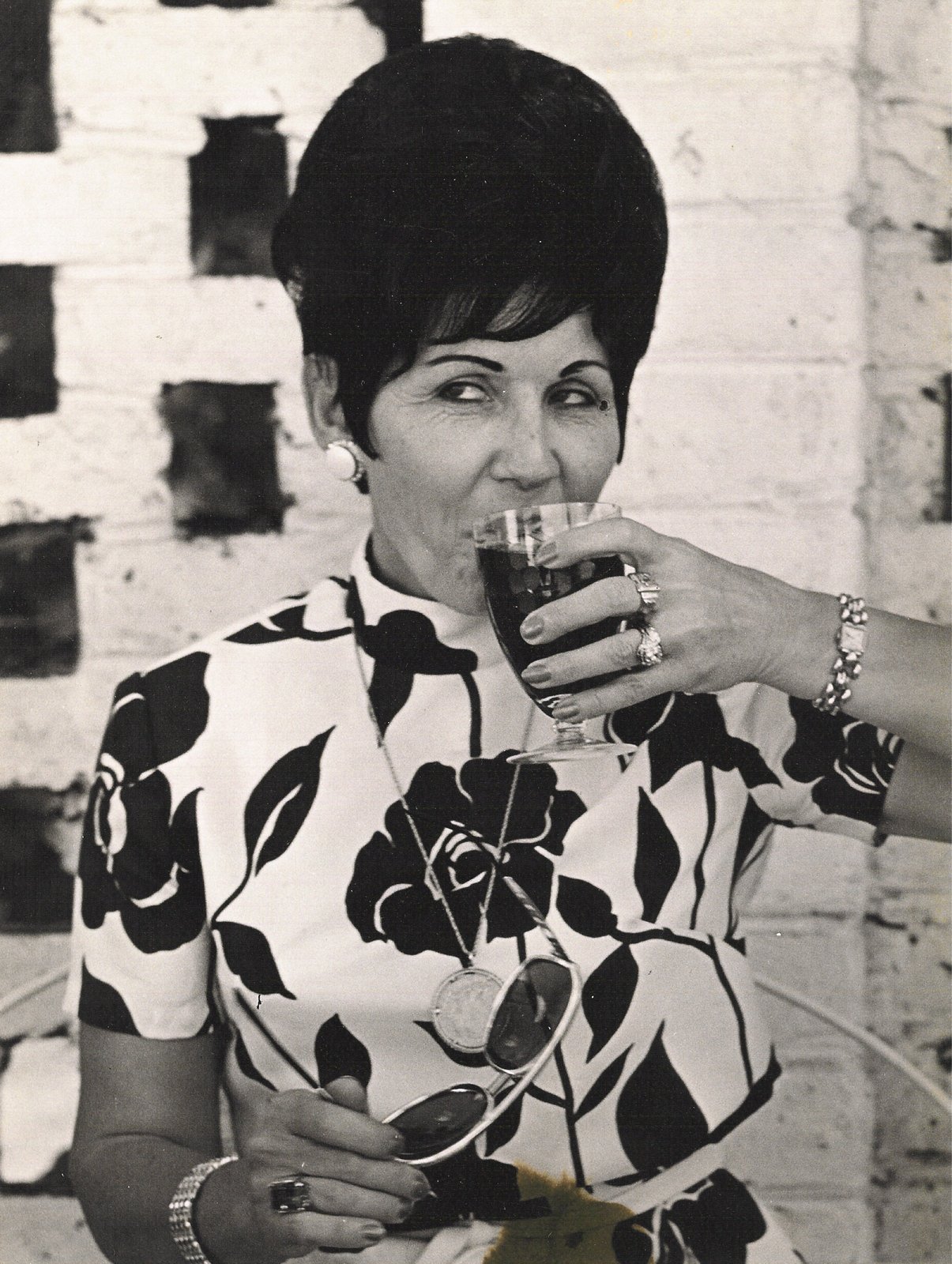
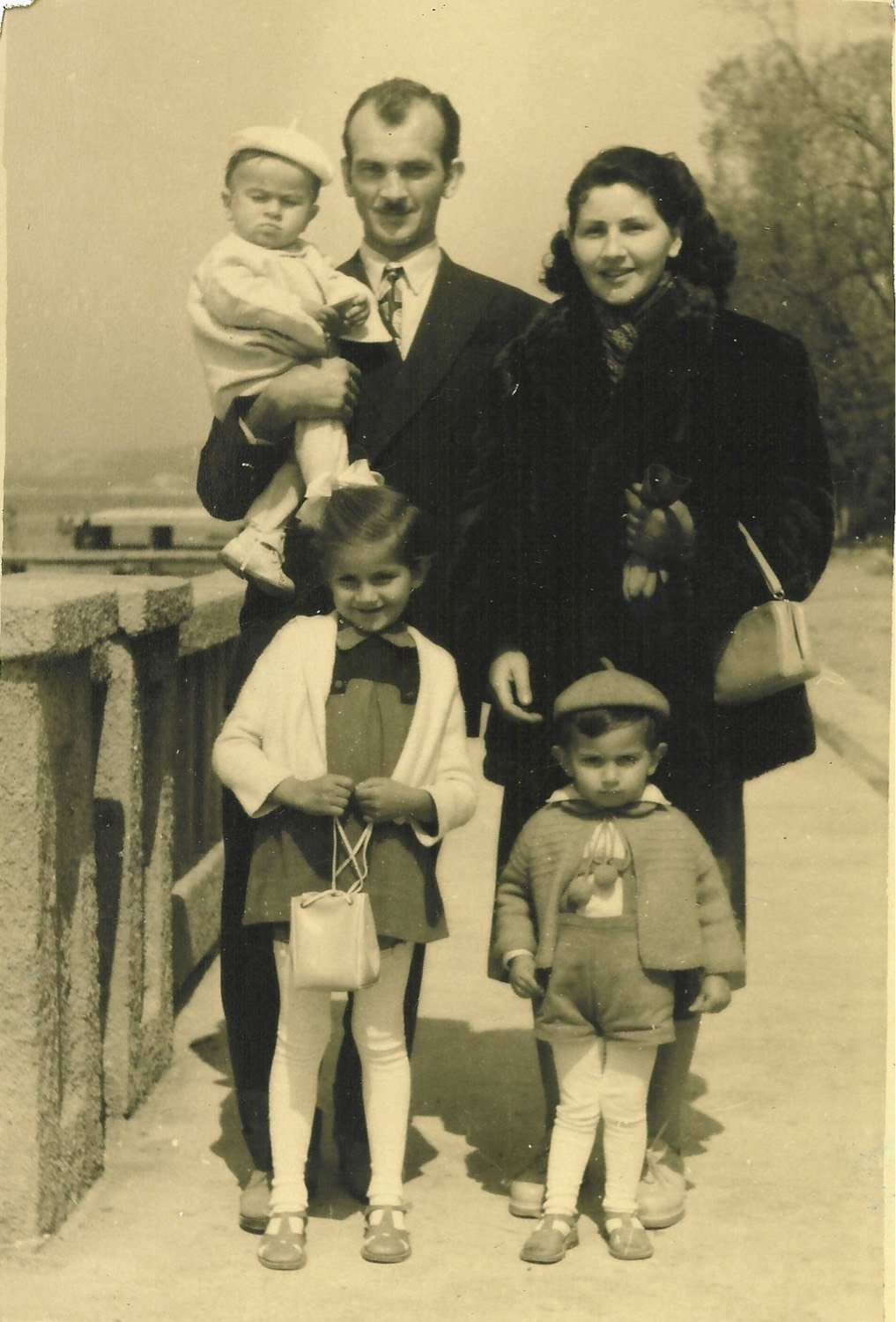
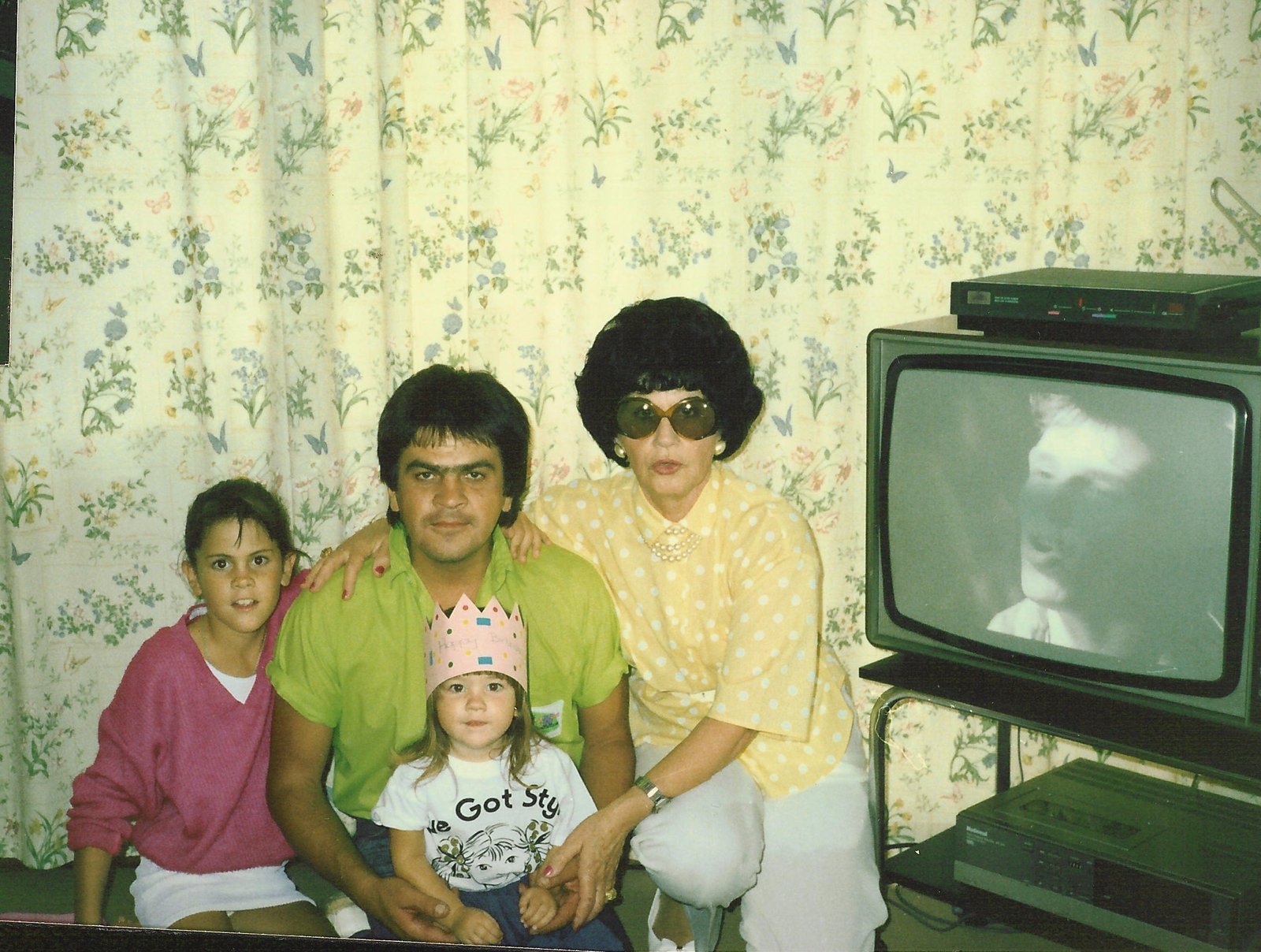
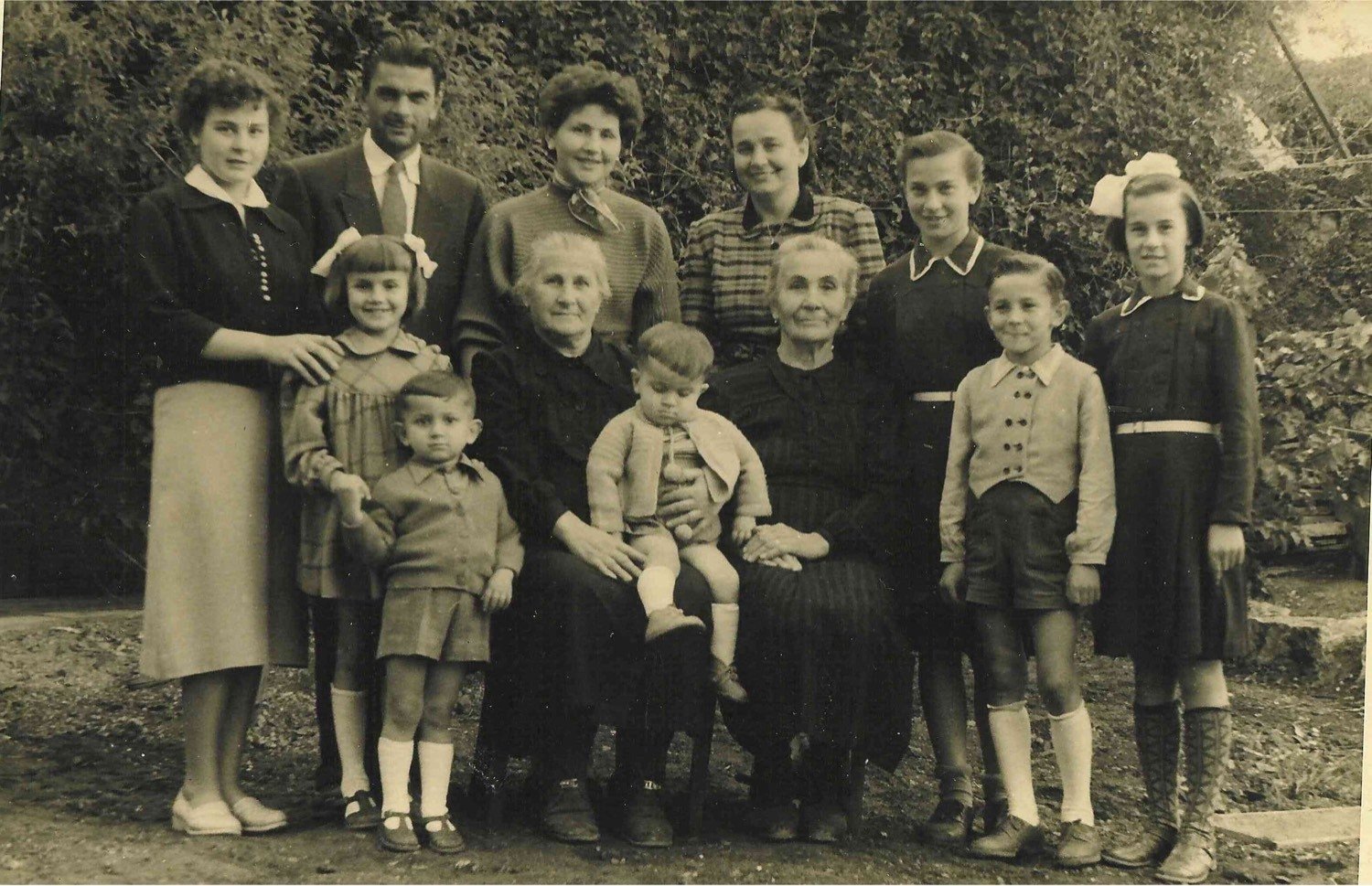
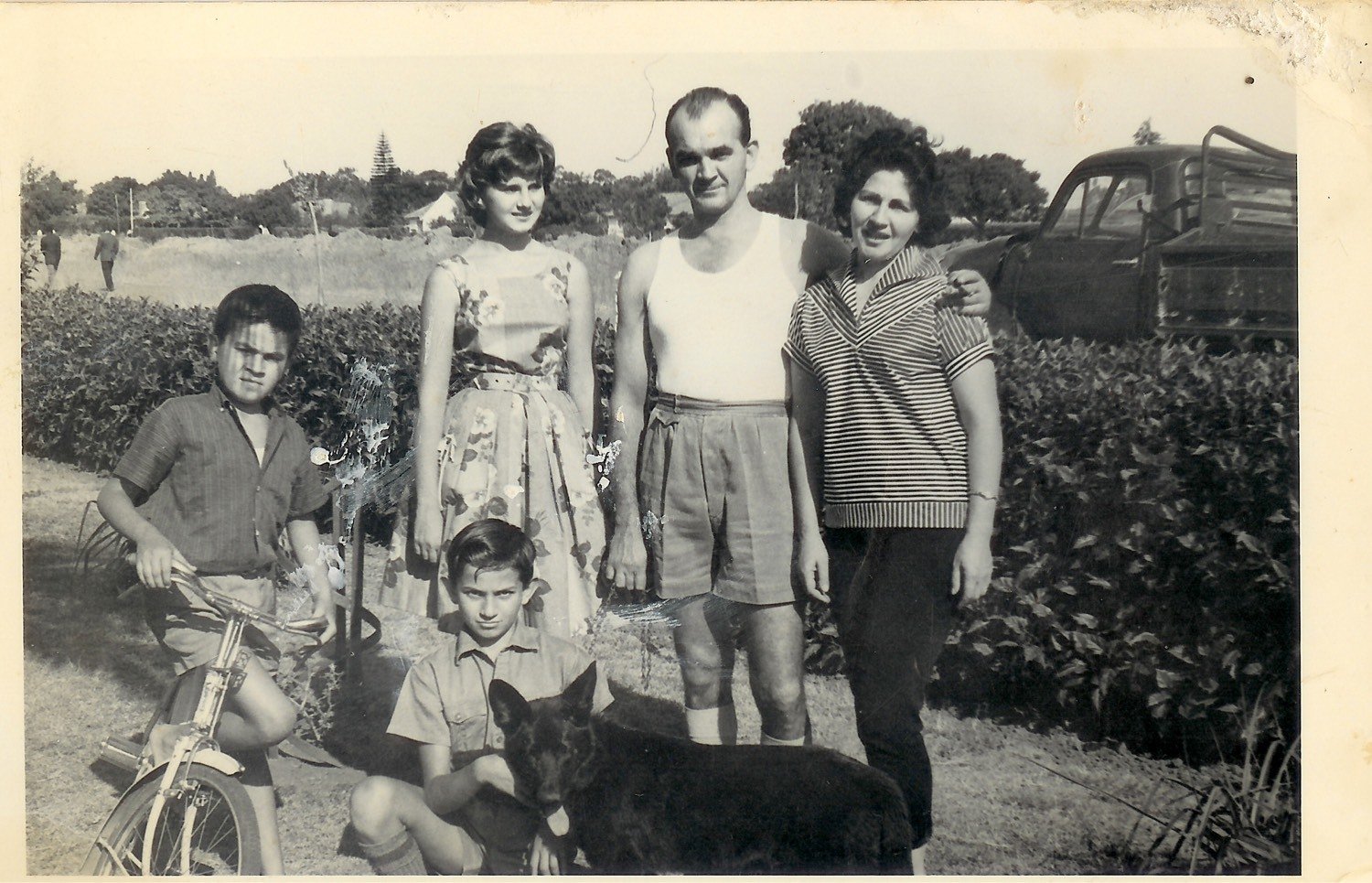
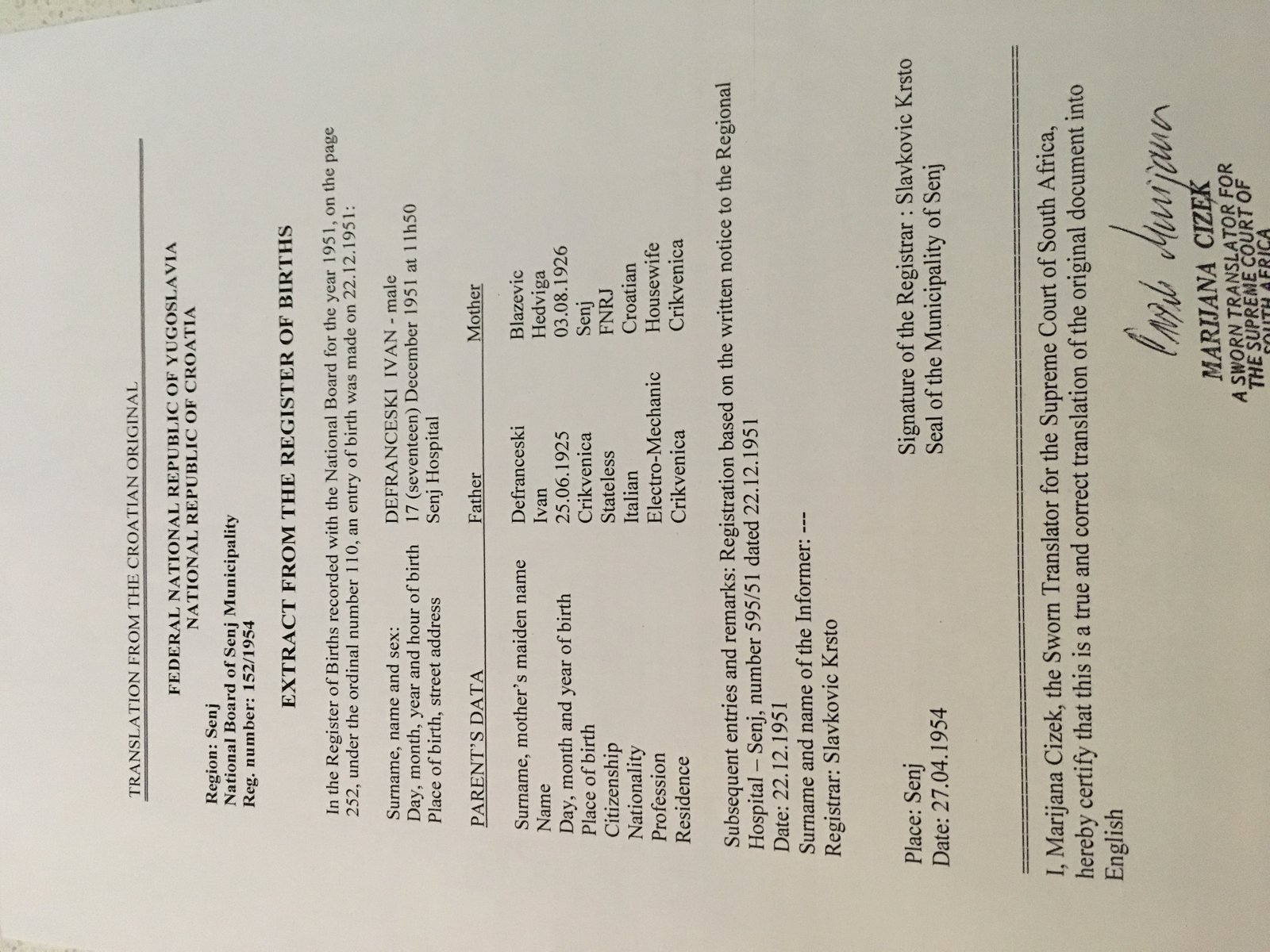
Four of these five photographs are unidentified. The tree carries them as filenames — 1595624858.9990501, 1134835622 — with no names, dates or places attached. Anyone who can put a name to a face in them should say so; that is the single most useful thing that could happen to this page.
What the tree carries on her
Her record cites two independent trees — the Defranceski Family Site and the Boras Web Site — which is corroboration between witnesses, not between documents. Why that distinction is kept →